
Hummus (Just 4 Real Ingredients)
Updated: Jun 12

There are actually some clean store-bought hummus options out there — but if your child has a sesame allergy, you won't find a single one on the market without tahini. And tahini is ground sesame. So when my daughter's love of hummus turned out to be part of how we discovered her allergy, I knew I had to figure something out. This is what I came up with and honestly, the whole family prefers it over store bought hummus.
Quick Summary
What it is: A creamy, sesame-free hummus made with just chickpeas, olive oil, lemon or lime, and salt
Why you'll love it: It's allergy-friendly, cheaper than any clean store-bought version, and somehow better than all of them
How to make it: Throw everything in a food processor, blend until smooth, done
Why I Love This Recipe
My daughter loved hummus. Like, really loved it. It was one of her favorite snacks, and I genuinely did not think twice about it until she had a reaction and we started piecing things together.
Every hummus on the market is made with tahini, which is ground sesame. It's the traditional way to make it, and I'm not here to argue with that. But when you're standing in the grocery store reading every label and realizing there is not a single option your kid can safely eat, your mama heart kind of breaks a little.
So I got to work.
I'll be honest with you — I wasn't sure it was going to be good without the tahini. Sesame has such a distinct flavor, and hummus has always had that nuttiness to it. But here's the thing: the result was so creamy, so flavorful, and so fresh-tasting that my husband and I just looked at each other. And then we looked at how little it cost us to make. And then we looked at the price tag on those cleaner store-bought tubs.
We haven't bought hummus since.
If you're not dealing with a sesame allergy and you want the traditional version, just add tahini. My recipe is built to work either way. But for our family, this is the one.
Ingredients
1 can (15 oz) organic chickpeas — the star of the show. I use organic because conventional chickpeas are one of the more heavily sprayed legumes. Don't drain all the liquid yet — you might need it.
1/3 cup olive oil — this is what gives it that rich, creamy texture without any tahini. Use a good one; it matters here.
1 lemon or lime — freshly squeezed. This brightens everything up and balances the richness of the oil. Either works; I've made it both ways and honestly both are great.
Salt to taste — start small and adjust as you go.

Variations & Substitutions
Lower calorie option: Swap some of the olive oil for aquafaba — that's the liquid from the chickpea can. It blends in smoothly and lightens up the texture without sacrificing creaminess. Start with replacing half the oil and go from there.
Traditional hummus: Just add tahini. Start with 2–3 tablespoons and adjust to taste.
Garlic: If you want a little more depth, add a small clove of raw garlic before blending. Roasted garlic works too and is a little more mellow.
Citrus: Lemon gives you a brighter, more classic flavor. Lime gives it a slightly different edge — a little more unexpected, equally good.
Instructions
1. Add everything to the food processor. Drain your chickpeas but save the liquid from the can. Add the chickpeas, olive oil, and freshly squeezed lemon or lime juice to your food processor. Season with salt.
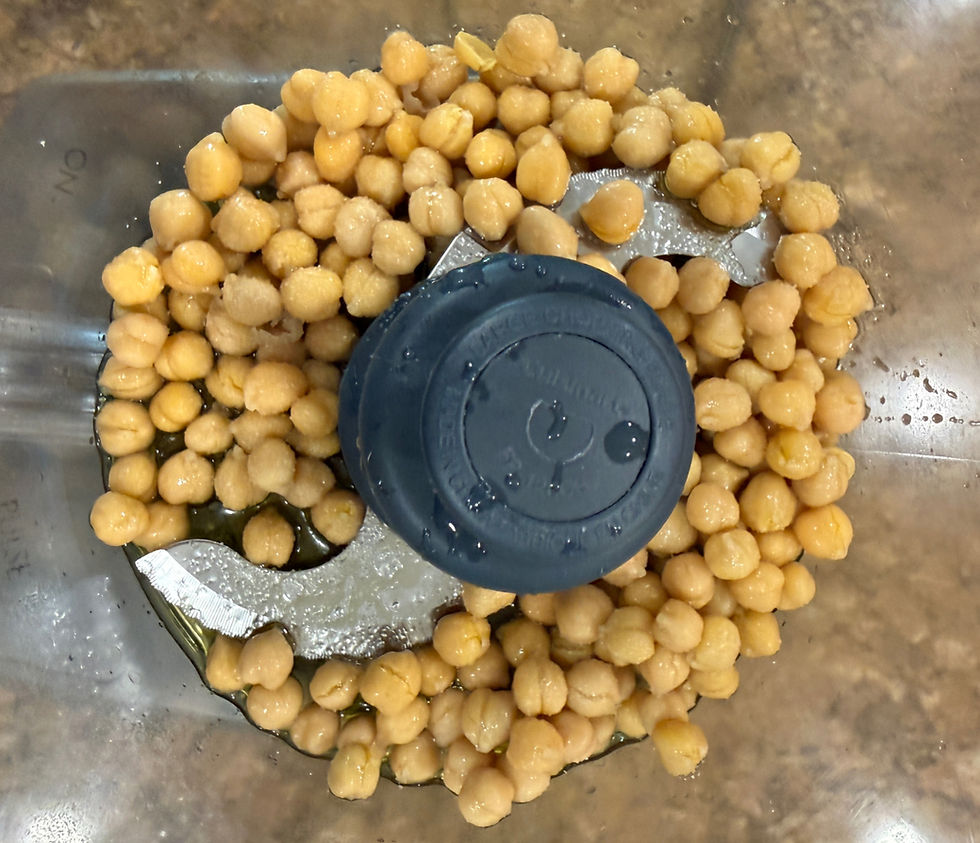
2. Blend until smooth. Run the food processor for a good minute or two, scraping down the sides as needed. You're looking for a smooth, creamy consistency with no lumps.
3. Adjust and taste. Give it a taste. Add more salt, more citrus, or a splash of the reserved chickpea liquid if it needs thinning. Blend again briefly to incorporate.
4. Serve or store. That's it. Spoon it into a bowl, drizzle a little olive oil on top if you'd like, and serve.
Tips & Tricks
Warm chickpeas blend smoother than cold ones. If you have a minute, give the drained chickpeas a quick warm in a small pan before blending.
Don't skip the scrape-down. Stop and scrape the sides of the food processor at least once mid-blend for an even texture.
A hand blender works too, but you'll likely need to add some of the aquafaba to help it move. A food processor gives you the best result.
The flavor deepens after a few hours in the fridge. It's great fresh, but it's even better the next day.
A drizzle of good olive oil and a pinch of paprika on top goes a long way for presentation.
Storage
Store in an airtight container in the fridge for up to 5 days. Give it a stir before serving if it's been sitting — sometimes the oil separates slightly and a quick mix brings it right back together. This one doesn't freeze well, but with how fast it disappears, that's never been a problem for us.
FAQs
Here are some suggested questions — cut, keep, or tweak any of them:
1. Does it actually taste good without tahini? Yes — and I say that as someone who assumed it wouldn't. The olive oil does a lot of the work that tahini normally does. It's creamy, rich, and flavorful without any of the nuttiness. My whole family prefers this version now.
2. What is aquafaba and why would I use it? Aquafaba is just the liquid in a can of chickpeas. It's starchy and slightly thick, which makes it a surprisingly good substitute for some of the oil if you want a lighter hummus. It blends right in.
3. Can I use dried chickpeas instead of canned? Yes, but you'd need to cook them first. Soak overnight, boil until tender, and let them cool before blending. The texture is great — just more planning ahead.
4. Is this safe for sesame allergies? This recipe has no sesame or tahini in it. That said, always check your individual ingredient labels, especially on packaged chickpeas, to make sure there's no cross-contamination risk for your family.
5. Can I add garlic? Absolutely. A small raw clove blends right in. Roasted garlic is a little sweeter and more mellow if raw feels too sharp.
6. What do you serve this with? We love it with fresh sliced veggies and either homemade pita or sourdough. It also works really well as a spread on sandwiches or wraps.
7. My hummus came out grainy — what happened? Usually this means it needed more blending time or a little more liquid. Add a tablespoon of aquafaba and run the food processor for another minute or two. It should come together.
8. Can I make this without a food processor? A hand blender works — just add some aquafaba to give it enough liquid to blend. The texture won't be quite as silky, but it's still really good.
Homemade hummus has become one of those things I can't believe I ever bought. It takes less than five minutes, costs a fraction of the price, and I know every single thing that went into it. That's what this kitchen is all about.


Comments